

Polyethylenimine (PEI) transfection reagent is a versatile tool widely used in gene delivery applications, including recombinant protein production, viral vector production, and CRISPR/Cas9-mediated gene editing. The GMP-grade PEI transfection reagent is specifically designed for clinical and commercial applications requiring rigorous quality control and compliance with Good Manufacturing Practices (GMP).
What is PEI Transfection Reagent?
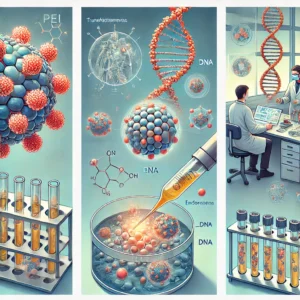
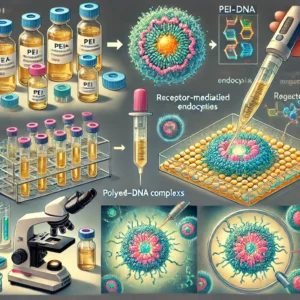
PEI is a cationic polymer known for its high efficiency in delivering nucleic acids, such as plasmid DNA (pDNA), RNA, and siRNA, into mammalian cells. It forms complexes with negatively charged nucleic acids, creating nanoparticles that facilitate cellular uptake through endocytosis. These characteristics make PEI ideal for transient and stable transfection in various cell lines.
Applications of PEI-GMP
1. Gene Therapy and Viral Vector Production
PEI-GMP is integral to the production of viral vectors such as adeno-associated viruses (AAV) and lentiviruses, which are essential for gene therapy applications. It ensures consistent vector yields and minimal cytotoxicity (FDA Gene Therapy Standards).
2. Recombinant Protein Production
PEI-GMP enables the large-scale transfection of suspension-adapted mammalian cells, such as CHO or HEK293, for the production of therapeutic proteins, monoclonal antibodies, and vaccines (NIH Therapeutic Protein Research).
3. CRISPR/Cas9 Applications
In genome editing workflows, PEI-GMP ensures efficient delivery of CRISPR plasmids or ribonucleoprotein complexes (RNPs) into target cells (Genome.gov).
Advantages of GMP-Grade PEI
- Compliance with GMP Standards: PEI-GMP is manufactured under stringent GMP conditions, meeting the requirements of clinical and commercial bioprocessing (European Medicines Agency).
- High Transfection Efficiency: It delivers consistent results across various cell lines, including suspension and adherent cultures (NIST Standards).
- Scalability: Suitable for small-scale research to large-scale commercial production without compromising quality or reproducibility (ClinicalTrials.gov).
- Low Cytotoxicity: Optimized formulations minimize cellular stress, improving transfection outcomes in sensitive cell lines (CDC Laboratory Guidelines).
- Long Shelf Life: Stability testing ensures prolonged usability, critical for large-scale operations (FDA Stability Requirements).

PEI Transfection Workflow
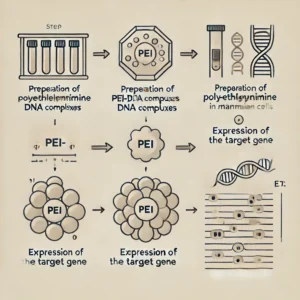
- Preparation of PEI-DNA Complex:
- Dilute PEI in sterile water or a buffer.
- Add DNA or RNA in a specific ratio (e.g., 3:1 PEI to DNA mass ratio) and incubate to form complexes.
- Cell Transfection:
- Add the PEI-DNA complex directly to cell cultures under optimized conditions.
- Incubate for the desired time, depending on the application (24-72 hours).
- Harvesting:
- For protein or virus production, collect supernatants or cells post-transfection.
- Analyze expression levels using ELISA, Western blot, or qPCR (NIH Laboratory Techniques).
Specifications of GMP-Grade PEI
| Property | Details |
|---|---|
| Molecular Weight | Available in linear and branched forms, typically ranging from 10,000 to 25,000 Daltons |
| Formulation | Sterile, endotoxin-free, and prepared under GMP-compliant conditions |
| Applications | Gene therapy, vaccine production, protein expression, CRISPR |
| Storage | Store at 2-8°C for long-term stability (CDC Bioreagent Guidelines) |
Clinical and Regulatory Considerations
PEI-GMP is widely used in therapeutic development due to its compliance with regulatory requirements for biopharmaceutical manufacturing. It is tested for:
- Endotoxin Levels: Ensuring safety for clinical-grade applications.
- Sterility: Preventing contamination in sensitive workflows.
- Batch Consistency: Critical for reproducibility in therapeutic production (FDA Biologics Guidelines).
Resources for Researchers and Manufacturers
- FDA Bioprocessing Standards
- NIH Recombinant DNA Advisory
- European Medicines Agency GMP Regulations
- ClinicalTrials.gov Transfection Research
The PEI-GMP Transfection Reagent combines efficiency, scalability, and compliance, making it the reagent of choice for advancing gene therapy, vaccine development, and therapeutic protein production. Whether for research or commercial-scale production, PEI-GMP ensures reliable and reproducible results. For further inquiries, visit FDA-approved suppliers.